Category Archives: Bookkeeping

total asset turnover

Nonetheless, generally, an asset turnover ratio result that is higher than those in the same industry would be interpreted as the company being better at moving products to generate revenue. Improving your inventory management can also help increase your asset Bakery Accounting turnover ratio, by reducing waste and ensuring that you have the right products in stock at the right time. In contrast, the manufacturing industry typically has a lower asset turnover ratio, around 1 to 2.

  • This understanding, in turn, can play a crucial role in investing, lending, and other business decisions.
  • We will also provide some examples of how different industries and businesses have different levels of asset turnover, and what that means for their performance.
  • However, a significantly high TAT, especially in comparison to industry norms, may not always indicate positive performance.
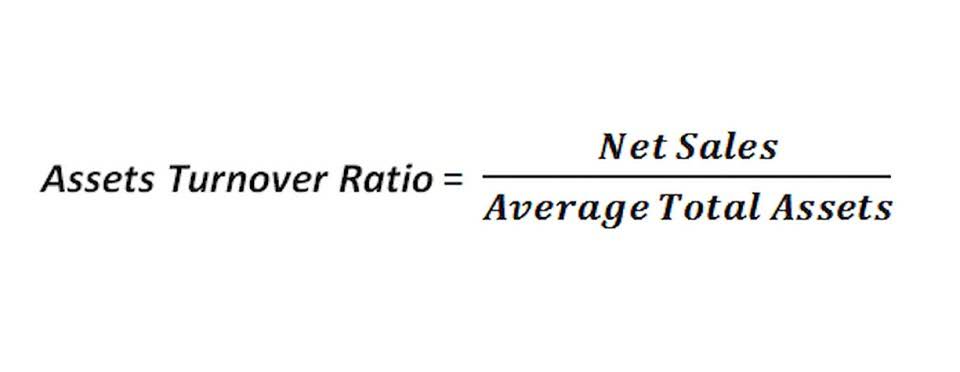
  • This formula provides a more accurate result by including only the net amount of an organization’s annual sales, after all refunds and returns have been removed from the total sales figure.
  • Over the same period, the company generated sales of $325,300 with sales returns of $15,000.

Total Asset Turnover Ratio

total asset turnover

This explains why the asset turnover ratio of Walmart and Target is way higher than Verizon and AT &T for the same year. As we can see from the calculation done, Verizon and AT&T both had an asset turnover ratio of less than one. In as much as this is considered a low ratio, it is not a bad thing because of the business sector that these companies belong to. This simply means that whether a company’s asset turnover ratio is considered good or poor would depend on its industry as well as the value of the asset turnover from the company’s previous records.

  • Unfortunately, the information provided by the total asset turnover ratio isn’t always of equal value for every potential investment you may wish to explore.
  • While asset turnover ratio is a useful tool for evaluating companies, like any calculation, it has its limitations.
  • In this case, a lower asset turnover ratio indicates that the company may not be using its assets efficiently.
  • The company generates $1 of sales for every dollar the firm carries in assets.
  • For example, a business may use different depreciation methods, inventory valuation methods, or revenue recognition methods, which may affect the value of its assets and revenue.

In the final analysis

From the calculation done, it is interpreted that for every dollar in assets, Walmart generated $2.29 in sales, while Target generated $1.99. Compared to Walmart, Target’s asset turnover is low which could be an indication that the retail company was experiencing sluggish sales petty cash or holding obsolete inventory. It is generally preferable for the interpretation of asset turnover ratio to be a higher value. A high asset turnover ratio indicates that the company is more efficient in generating revenue from its assets. If the asset turnover ratio of a company is greater than 1, it is considered a high ratio.

  • Most of their revenue is generated through human capital and intellectual properties.
  • As everything has its good and bad sides, the asset turnover ratio has two things that make this ratio limited in scope.
  • Therefore, it is not meaningful to compare the asset turnover ratios of businesses across different industries, but only within the same industry or sector.
  • Asset turnover may vary significantly depending on the nature and characteristics of the industry or business model.
  • The formula for the asset turnover ratio evaluates how well a company is utilizing its assets to produce revenue.

Impact on Profitability and Revenue
total asset turnover

In this section, we will discuss some of the main limitations of asset turnover analysis and how to overcome them. The total asset turnover ratio is one of the many efficiency ratios that let you evaluate how well a company is using its assets to generate income. AT&T and Verizon have asset turnover ratios of less than one, which is typical for firms in the telecommunications-utilities sector. These companies have large asset bases, so it is expected that they will slowly turn over their assets through sales.

total asset turnover

Cara Menghitung Total Asset Turnover

It is a reflection of how well a company is managing its asset base to maximize revenue. A high total asset turnover asset turnover ratio can be indicative of effective resource utilization. This can contribute to the fulfilment of a company’s CSR policies, particularly those focused on efficient resource use. Companies committed to CSR often strive to minimize wastage and ensure that their operations are as efficient as possible. Also, a business might intentionally limit sales growth while refining its product or investing in research and development.

  • To improve the asset turnover ratio, a company can increase sales, reduce its assets, or both.
  • To illustrate some of these factors, let us look at some examples of businesses with different asset turnover ratios and analyze the reasons behind them.
  • Furthermore, a company holding excess cash on its balance sheet will show a low asset turnover ratio compared to companies in the same industry with limited cash holdings.
  • The operating efficiency and the inventory management can affect the net sales and the asset turnover ratio by influencing the utilization and the turnover of the assets.
  • This ratio is particularly useful for comparing companies within the same industry, as it can highlight differences in management effectiveness.

how to do bookkeeping for real estate

Not only is it extremely complicated, but it is also time-consuming. Moreover, you may also risk missing your money on taxes, which can lead to IRS penalties. If you ask any successful realtor, they will always see bookkeeping helped them grow their business. This is because they have a higher chance of managing their overall financial situation. So get your coffee, this is the real estate finance crash course that you should have taken before tax season.

  • A well-structured bookkeeping setup ensures each property’s finances are organized and accessible, reducing errors and improving decision-making.
  • We run AP/AR support, reconciliations, lease admin tracking, and prepare close packs.
  • A larger workforce brings more opportunities for accidents, such as damage to someone else’s property.
  • If you want real estate bookkeeping services from Invesis, make sure you contact the sales team.
  • The Home Office Deduction could be one of your biggest tax savings, but most people either don’t file it or use the wrong method and give extra cash to the IRS.

Complex taxes

For investors, each property is essentially its own mini-business. Without tracking expenses separately, you’ll never know which properties are profitable and which are draining cash. Whether some costs should be classified as part of the marketing or the property costs is not always apparent; e.g. is staging a marketing or a property cost? Are the repairs regarded as regular maintenance or must it be treated as capital improvements?

Small Businesses

how to do bookkeeping for real estate

Bookkeeping services for real estate need structure, speed, and clarity. Join over 1 million businesses scanning & organizing receipts, creating expense reports, and more—with Shoeboxed. Turn your receipts into data and deductibles with our expense reports, including IRS-accepted receipt images. Not reviewing financial statements can cause undetected errors and a lack of understanding of the business’s financial health. Not recording all sources of income like rental income, commissions, or referral fees.

Self-driving construction accounting. Loved by the industry.

how to do bookkeeping for real estate

Real estate agents and property managers need separate accounts and careful tracking to clearly distinguish business income and expenses from personal transactions. This separation also makes it easier to document deductions and maintain credibility with investors or lenders. Handling rental income, maintenance bills, deposits, and vendor payments https://glowtechy.com/why-professional-real-estate-bookkeeping-is-essential-for-your-businesses/ is not simple.

Full-Service Expert Accounting and Bookkeeping Services for USA Businesses

how to do bookkeeping for real estate

Real estate professionals handle multi-state accounting by tracking income and expenses separately for each state, understanding state-specific tax rules, and filing the appropriate state returns. Many use accounting software with location tagging or consult CPAs familiar with multi-state filings. Outsourcing works well for solo agents or small teams with straightforward needs. If you’re mainly tracking commissions, expenses, and a few tax deductions, a freelance bookkeeper or accounting firm can handle your books at a lower cost.

Track Every Transaction by Property

Some real estate business owners use manual spreadsheets from programs like Numbers, Excel, Google, and OpenOffice to track expenses and income. This is only practical if the business is small; keeping the information current can be time-consuming and laborious. Whiz Consulting is another popular real estate bookkeeping service provider. Whether you’re a real estate agent, manager, or builder, it can undoubtedly streamline financial management for you. This is another common real estate bookkeeping mistake you need to avoid. When you merge your business bank accounts with personal accounts, you will face lots of problems managing your financial investment.

how to do bookkeeping for real estate

The first option is not in line with just in time (JIT) principle which focuses on minimizing all types of inventories. Excessive inventories, particularly those that are still in process, are considered evil as they generally cause additional storage cost, high defect rates and spoil workers’ efficiency. Due to these reasons, managers need to be cautious in using this variance, particularly when the workers’ team is fixed in short run.

Process of Calculation

Typically, the hours of labor employed are more likely to be under management’s control than the rates that are paid. For this reason, labor efficiency variances are generally watched more closely than labor rate variances. It occurs when the actual hours worked are more than the standard hours allotted for a specific level of production. In such cases, the negative variance indicates lower efficiency, as more time than expected was needed to complete the work.

Accounting Ratios

Chartered accountant Michael Brown is the founder and CEO of Double Entry Bookkeeping. He has worked as an accountant gross pay vs net pay and consultant for more than 25 years and has built financial models for all types of industries. He has been the CFO or controller of both small and medium sized companies and has run small businesses of his own. He has been a manager and an auditor with Deloitte, a big 4 accountancy firm, and holds a degree from Loughborough University. The actual results show that the packing department worked 2200 hours while 1000 kinds of cotton were packed. During the year, the company spends 200,000 hours producing 35,000 of output.

Controlling these costs is essential, and one of the key ways to do this is through calculating direct labor efficiency variance. This calculation will help you to compare the labor hours you’ve budgeted with the hours actually worked. By calculating it, you will pinpoint inefficiencies net assets and make informed decisions. Project deadlines are becoming tighter, and the rising cost of skilled labor, understanding and improving labor efficiency isn’t just a recommendation. Consequently this variance would be posted as a credit to the direct labor efficiency variance account.

For example, advanced tools like SmartBarrel’s workforce management solutions provide real-time insights into labor usage on the construction site. It gives you accurate data on direct labor hours, so you’ll be able to quickly identify inefficiencies and eradicate them before they impact the project’s budget. Direct labor efficiency variance is a financial metric that takes the standard labor hours estimated during the planning phase of a project and compares them with the actual direct labor hours that have been used. It is very important to measure how close you are to what you expected in order to determine how well labor is utilized on a jobsite.

Direct Labor Efficiency Variance:

After getting multiple quotes, you have determined that the standard cost of the job will be 20 hours of labor at $60 per hour. When the job is finished, you find that you paid for 33 hours of labor at $60 per hour. When you plug this into the formula, you get a direct labor efficiency variance.

  • In such situations, a better idea may be to dispense with direct labor efficiency variance – at least for the sake of workers’ motivation at factory floor.
  • Direct labor efficiency variance is a financial metric that takes the standard labor hours estimated during the planning phase of a project and compares them with the actual direct labor hours that have been used.
  • It mirrors the concept of the materials usage variance in tracking resource utilization against predetermined benchmarks.
  • By calculating it, you will pinpoint inefficiencies and make informed decisions.
  • Any of these issues can prevent workers from using their time as well as competitors in the industry.

That’s easy to justify since you spent 13 more hours on labor than you expected. This formula gives you a clear picture of how much the actual labor usage deviated from the budgeted amount. A positive result indicates how to calculate sales tax greater efficiency (i.e., less time was needed), while a negative result highlights inefficiencies (more time was used than planned).

By measuring deviations in labor usage, businesses can identify areas of inefficiency, wastefulness, or overperformance. Favorable variance means that the actual labor hours’ usage is less than the actual labor hour usage for a certain amount of production. We may think that only unfavorable variance is required to solve as it impacts the profit at the end of the year. It is correct that we need to solve the unfavorable variance, however, the favorable variance also required to investigate too.

What is Variance Analysis? Definition, Explanation, 4 Types of Variances

This shows that our labor costs are over budget, but that our employees are working faster than we expected. At first glance, the responsibility of any unfavorable direct labor efficiency variance lies with the production supervisors and/or foremen because they are generally the persons in charge of using direct labor force. However, it may also occur due to substandard or low quality direct materials which require more time to handle and process. If direct materials is the cause of adverse variance, then purchase manager should bear the responsibility for his negligence in acquiring the right materials for his factory. Labor efficiency variance happens when the price per direct labor remains the same but the time spends to produce one unit different from standard costing.

Importance and Usage Scenarios

Generally, the production department is responsible for direct labor efficiency variance. For example, if the variance is due to low-quality of materials, then the purchasing department is accountable. Subscription-based bookkeeping services are transforming the way businesses manage their finances, offering predictable pricing, scalability, and automation-driven efficiency. Instead of paying hourly or hiring in-house staff, businesses can now access professional bookkeeping on a fixed monthly or annual subscription model.

  • This shows that our labor costs are over budget, but that our employees are working faster than we expected.
  • Understanding these can help you identify potential issues and implement corrective actions.
  • Like in any other variance, if the standard is obsolete and not applicable to the current situation, it should be updated.
  • A positive value of direct labor efficiency variance is obtained when the standard direct labor hours allowed exceeds the actual direct labor hours used.
  • If the actual hours are greater than the standard hours, then the variance is unfavorable because more time was spent on production than expected, leading to decreased efficiency.

If you want to optimize labor efficiency, investing in the workers is imperative. Trained employees will always be more efficient than untrained ones as they understand the intricacies of complex tasks more. With advanced training, they’re also empowered to solve more problems as it arises on the worksite.

Conversely, when the calculation yields a positive number, it demonstrates an unfavorable variance and shows that the work was done inefficiently. Several factors can impact your direct labor efficiency variance on the construction site. Understanding these can help you identify potential issues and implement corrective actions.

Labor efficiency variance is a term used in managerial and cost accounting to measure the difference between the actual hours of labor needed to produce a good or perform a service and the standard or expected hours of labor. It is used to understand if the production process is efficient in terms of labor usage. The direct labor efficiency variance does not analyze changes in labor rates. Direct Labor Efficiency Variance is the measure of difference between the standard cost of actual number of direct labor hours utilized during a period and the standard hours of direct labor for the level of output achieved. We’ll also show the formula used to calculate it and the factors that affect its calculation. By the end, you’ll be able to understand how this measurement can improve your project’s labor costs, which means that it will ensure a more profitable outcome.

Additionally full details of the journal entry required to post the variance, standard cost and actual cost can be found in our direct labor variance journal tutorial. Labor efficiency variance, also referred to as labor time variance, constitutes a segment of the broader labor cost variance. This variance emerges from the disparity between the anticipated standard labor hours and the actual hours expended.

To put it simply, if your workers are taking longer to complete a task, your labor costs will go up. On the other hand, if tasks are completed faster than expected, your project will be considered more labor-efficient, decreasing the costs. Monitoring this variance enables you to identify different areas in which productivity can be improved and, even more importantly, where time and costs are being wasted. When you apply the formula to financial accounting, you get meaningful results at a glance. If the number is negative, then it reflects a cost savings over your expectations. By convention, the negative sign is usually dropped, and the word “favorable” is attached to the variance instead.

current assets definition

Overall, the role of these assets in financial accounting is pivotal as it can influence a company’s short-term financial health, the effectiveness of its operations, and its investment attractiveness. This is a catchall category covering any other current assets you can easily convert to cash within a year. Use this designation to list items such as promissory notes, tax refunds, or other liquid holdings that don’t fit into the categories above. That’s why managing current assets is important for any small business accounting practice. Knowing how to analyze and optimize them is essential for healthy cash flow and sustainable growth.

Understanding Financial Ratios That Use Current Assets

  • Current assets are assets that a business owns and expects to convert into cash or use up within one year, with minimal risk of value loss.
  • These fluctuations impact cash flow and liquidity, necessitating careful management to maintain financial stability.
  • Current assets appear on the balance sheet as the first section under ‘Assets’.
  • Selling current assets gives your business the cash to pay its current liabilities such as operating expenses, bills, and loan payments.
  • It’s how you understand your ability to cover costs and invest in the business in the immediate future.

These are the assets that will have their impact in the business within a year or within one operating cycle. They are called current assets because they can be converted into cash within 12 months. current assets definition Businesses rely on these liquid resources to cover payroll, restock inventory, or capitalize on supplier discounts without incurring expensive debt. For further practice on classifying current and non-current assets, students can read more about balance sheets and financial statements, and attempt additional problem sets. Exploring current asset ratios strengthens analytical skills, which are essential in accounting, business, and economics studies. They are the group of liquid assets that are expected to be used, consumed, or converted into cash within 12 months from reporting date.

Rental Income and Capital Gains

  • The quick ratio uses assets that can be reasonably converted to cash within 90 days.
  • Inventory, a significant component of current assets, includes raw materials, work-in-progress, and finished goods ready for sale.
  • This number doesn’t include the catering company’s capital (non-current) assets such as cooking equipment, and delivery vans as those items won’t soon be converted into cash.
  • It includes domestic and foreign currency, a business checking account that’s used to pay expenses and receive payments from customers, and any other cash on hand.
  • Additionally, supplies are a crucial aspect of current assets, as they are essential for maintaining business operations.

The main differences between the current and non-current assets are their liquidity and time frame for conversion. Current assets are expected to be converted into cash or used up within a year, while non-current assets are held for longer periods. Understanding the distinction between current and non-current assets is crucial for assessing a company’s financial health and ability to meet its short-term and long-term financial commitments. Current assets directly affect liquidity ratios like the current and quick ratios, which measure a company’s ability to meet short-term liabilities.

Financial Ratios: Definition, Types, and Examples

  • Visualize the way your money moves, and move your business like an expert.
  • They include cash, cash equivalents, inventory, accounts receivable, and other liquid assets that can easily be converted into cash or used within a short time frame.
  • Insurance premiums are often paid before the period covered by the payment.
  • In effect, successful financial executives turn managing current assets into a continuous, not just reporting, activity.
  • For example, an increasing debt-to-asset ratio can indicate that a company relies heavily on borrowed capital, raising financial risk.

Master the fundamentals of financial accounting with our Accounting for Financial Analysts Course. This comprehensive program offers over 16 hours of expert-led video tutorials, guiding you through the preparation and analysis of income statements, balance sheets, and cash flow statements. Gain hands-on experience with Excel-based financial modeling, real-world case studies, and downloadable templates. Upon completion, earn a recognized certificate to enhance your career prospects in finance and investment. https://apradipta.com/fillable-editable-construction-invoice-template/ A current asset is an item on an entity’s balance sheet that is either cash, a cash equivalent, or which can be converted into cash within one year. If an organization has an operating cycle lasting more than one year, an asset is still classified as current as long as it is converted into cash within the operating cycle.

Current assets formula

Disproportionate inventory or inflated accounts receivable may warrant efficiency improvements. In the complex landscape of business finances, understanding the different types of assets is paramount. These are the lifeblood of any business, providing the necessary resources for daily operations and demonstrating a company’s short-term financial health.

Many professionals use financial ratios to understand and manage their financial dealings. These assets are initially recorded at their fair market value or cost. For instance, cash and accounts receivable are recorded at their cash values. Cash Equivalents – Cash equivalents are investments that are so closely related to cash and so easily converted into cash, they might as well be currency. T-bills can be exchanged for cash at any point with no risk of losing their value.

Current assets are characterized by their high liquidity and short-term conversion potential. They are typically expected to be turned into cash within a single business cycle or year. Another key characteristic is their role in supporting day-to-day operations, promoting financial agility. Notably, they fluctuate with business activities, reflecting sales trends and inventory management efficiencies.

What are financial ratios?

current assets definition

Ambrook‘s real-time, interactive reports and easy-to-use workflows help you build habits around balance sheet maintenance, ensuring your financial data is always ready. ‘Fixed’ or ‘non-current’ assets are any assets that you don’t expect to use up within one year, and include things like vehicles, equipment, land, buildings and breeding livestock. As we note from above, MacDonald’s percentage of cash and short-term investments to Total Assets was 58.28% in 2007 and 69.7% in 2006.

current assets definition

Step 4: Increase short-term investments

current assets definition

If you have inventory collecting dust, these unsold products are just tying up cash that you could be putting to better use. Using inventory management software, identify slow-moving or outdated stock and find ways to liquidate it — e.g., discounts, bundle deals, flash sales, etc. And moving forward, you might consider adopting the Just-in-time (JIT) inventory method, which focuses only on ordering products when you need them so you can reduce the risk of overstocking. Don’t forget to include your prepaid expenses — you’ve already made for goods or services you’ll receive in the future, such as leased equipment and insurance premiums. However, this basic financial principle is what currently influences all daily business operations, from executive meetings to warehousing operations. They provide the lifeblood of an organization’s daily operations, offering a clear snapshot of its liquidity and operational efficiency.

current assets definition

Current assets examples

While current assets have a direct and continual effect on your cash flow, non-current assets also affect it significantly. For example, a catering company has $20,000 in the bank and $500 cash on hand. It also has $3,000 of food inventory and $500 in miscellaneous supplies (napkins and disposable plates). You simply add up all of the cash and other assets that Foreign Currency Translation you can convert into cash in a year. Financial ratio analysis is used by a company’s external and internal stakeholders to assess financial health. External users include investors, equity research analysts, lenders, and creditors.

construction invoice

Provide all the necessary information for each payment method, like your check mailing address or a link to your online payment portal. Your invoice should prominently display your construction company’s name, physical address, phone number, email, and website. Smartsheet provides a better way to unify collaboration and automate workflows so you can spend more time on the work that matters.

  • Whether you’re running the show solo or your small business is booming, branded invoice templates bring a professional touch to your billing.
  • A construction invoice template is a form used for billing customers for labor and materials costs that resulted from building or renovating residential/commercial property.
  • Submitting an invoice for the work or materials you provide is only one small step — it’s not a “send it and forget it” scenario.
  • The Canada Revenue Agency (CRA) has specific requirements for business record-keeping, including invoices.
  • It’s designed for flexibility and supports both digital record-keeping and printed invoices.

Consequences of treating an employee as an independent contractor

This template is ideal for contractors seeking a simple, professional invoicing tool. It offers a clear, organized layout to detail labor, materials, and total project costs and ensure accuracy, clarity, and construction invoice transparency in billing. Available in multiple file formats, it supports both handwritten and digital input, making it easy to use in any work environment — from job sites to home offices. We’ve gathered the most useful construction invoice templates in all formats. You’ll learn about the key elements in all construction invoices. Support business operations with Excel invoice templates designed for clarity and consistency.

Adobe PDF Painting Contractor Time and Materials Invoice Template

construction invoice

A well-structured invoice also simplifies tracking payments received and outstanding balances. By using a consistent format, construction businesses can maintain professional financial records, improve cash flow management and ensure compliance with accounting best practices. A well-crafted construction invoice template saves you hours of admin time, minimizes mistakes, and ensures you’re getting paid accurately for the goods or services you’ve provided. It’s one of the most valuable tools you can have as a contractor. A construction invoice is a formal document issued by a contractor or supplier to a client, detailing the costs for goods and services rendered during a construction project. It serves as a request for payment and provides a detailed breakdown of expenses.

Cost Breakdown

  • If you are looking for a structured way to request and authorize construction work, explore this collection of free construction work order templates.
  • Save, download, and send the invoice in a PDF format to maintain its layout and ensure compatibility across different devices and systems.
  • Specify the payment due date, such as “Net 30” (payment due within 30 days of the invoice date), “Due on Receipt,” or any other agreed-upon terms.
  • Depending on your billing method, you may need to include other information alongside this.
  • Depending on the type of business you run, and if you are registered for the Construction Industry Scheme, you may issue a different type of invoice.

This document breaks down costs into clear line items and schedules. This makes it easy for clients to see what they’re paying for, making payments smoother. Knowing the difference between an invoice and a payment application is key for contractors. An invoice vs payment application shows two ways to bill for construction work. Including these components ensures your Balancing off Accounts invoices are professional, clear, and effective at securing prompt payments while minimizing back-and-forth communication with clients.

construction invoice

Project Information

For instance, if the contract includes retainage, the owner or GC generally withholds 5-10% of the dollar amount from each progress payment. This practice often flows down to subcontractors and even sub-subcontractors. https://www.garantie-loyer.com/bookkeeping-synonyms-13-similar-words/ If subcontractors are unaware that retainage will affect their payment timeline, they may halt their work until resolving the dispute, thereby blocking other aspects of the project from completion. These invoices also keep record of materials delivered and smaller jobs completed. Invoices are generally straightforward bills from vendors or contractors on smaller jobs or residential projects. Residential or renovation contractors often prepare a simple invoice with their company name, a description of the work completed, the amount payable and the payment terms.

construction invoice

She won gold at the 1992 Olympics and two World Championships, known for her technical prowess and artistic expression. Yamaguchi’s post-skating work as a philanthropist and author has continued her legacy of empowerment. Figure skating is an intriguing sport and is a sport which has gathered the crowds since earlier times. It requires exceptional competence from its athletes and is a highly demanding sport which needs you to dedicate your full time to your fitness to be able to compete on the highest level.

The Best Female Figure Skaters of All Time

Kristi Yamaguchi is an American figure skater who won an Olympic gold medal and is now retired. She is best remembered for winning the gold medal in figure skating for women at the Winter Olympics in Albertville, France, in 1992. He was also a four-time U.S. national winner and a two-time World winner (1991 and 1992). People loved her unique style and technical skills, like her jumps and spins, which made her one of the best figure skaters of her time.

List of Famous Figure Skaters

Former Ukrainian figure skater Oksana Baiul gained notable for winning the 1994 Winter Olympics women’ singles gold medal in Lillehammer, Norway. She became one of the youngest figure skating Olympic champions aged 16. Baiul’s artistry, elegance, and emotional depth made her victory a boost for figure skating in Ukraine and internationally.

Not only is Hamilton one of the greatest skaters of all time, but he remains a true ambassador for the sport — and not just in the United States. The diminutive Hamilton overcame a childhood illness to eventually win four consecutive national championships within the U.S. ( ) and four straight world titles. Of course, Hamilton’s career highlight came with a gold at the 1984 Olympics in Sarajevo.

Their legacies inspire new generations of skaters and remind us of the enduring power of grace, strength, and determination. Retired American figure skater Michelle Kwan is considered one of the best. She ruled figure skating for over a decade after being born in Torrance, California, on July 7, 1980. Michelle Kwan was a skating icon and symbol of endurance due to her grace, consistency, and technical skill. Her iconic routines set to classical and contemporary music showcased her emotive expressions and skating. After retiring from competitive skater in 2006, Kwan has continued to skate and volunteer.

Top 10 Greatest Female Figure Skaters of All Time

The greatest American ladies’ single skaters have the strength, flexibility, and coordination to complete difficult figure skating moves, from the triple axel to the Biellmann spin. Russian figure skaters hold the unique record of having won gold medals in all six Olympic figure skating events. Since men’s special figures was discontinued, this record cannot be matched. This Norwegian female figure skater has broken all records of greatness. Her incredible feats are her winning three Olympic gold medals which is done by none other than her.

However, her career included injuries, personal troubles, and post-competitive issues. Despite these losses, Oksana remained a popular skater and performed in ice performances on TV. Since February 2025, the world of female figure skating has been graced by a number of exceptional athletes who have displayed remarkable skill and artistry.

Which female skater has won the most Olympic gold medals?

These skaters represent the future of the sport, and we’re proud to be part of their journey. Kim Yuna of South Korea became the 2010 Olympic figure skating champion. These women have not only left their mark on figure skating but have also become symbols of resilience, creativity, and excellence. Their stories remind us that greatness is achieved through dedication, passion, and the courage to break barriers. Kristi Yamaguchi (USA)Kristi Yamaguchi’s journey from a young skater with a medical condition (clubfeet) to Olympic champion is nothing short of inspiring.

  • It is a sport which needs their athletes to perform figure skates on a field made of ice and for this reason it has great historical significance in the Olympics.
  • American Figure Skater Kristi Yamaguchi ranks in the eighth position among the greatest female figure skaters.
  • The dazzling world of figure skating has been elevated by remarkable female figure skaters who have enthralled audiences with their exceptional talent and dedication to the sport.
  • Six events have been contested but one, men’s special figures, was discontinued after a single Olympics.
  • She has won a gold in the 1960 Olympics and a silver in the preceding one.
  • For years Button was a staple as a television analyst, most notably for ABC.

Yamaguchi became famous in the entertainment world after she stopped professional skating. She appeared on TV shows like “Dancing with the Stars,” where she won the competition in 2008. She is also known for her charitable work, especially the way her Yamaguchi Foundation helps kids learn to read and write. Former American figure skater Carol Heiss is most recognized for her achievements in the 1950s and 1960s. She won the gold medal in women’s figure skating at the 1960 Olympics, was a six-time U.S. national champion from 1953 to 1958, and was a two-time World Champion from 1956 to 1960. Heiss is renowned for her grace and technical accuracy on the ice, making her one of the top skaters of her time.

Be it their exceptional grace or incredible athleticism, each of these famous ice skaters has demonstrated outstanding dedication and mastery in their field. The charismatic German skater was the first woman to win consecutive Olympic gold medals in singles figure skating since Sonja Henie in 1936. This German athlete is tough competitor to The top spot of the greatest female figure skaters.

  • She is from the United States and the youngest to win a gold at the Olympics for female figure skating.
  • Her beautiful yet strong skating style and involvement in connecting East and West Germany during a politically tense time made her a sports legend.
  • She is the winner of The Grand Prix Final champion two times and is the 1997 US Champion also.
  • A two-time World Champion and Olympic silver medalist (2002), Slutskaya’s resilience, particularly in overcoming health challenges, inspired fans and competitors alike.

Evgenia Medvedeva is a Russian figure skater who has won two silver Olympic medals, two World Championship gold medals, and two European Championship gold medals. At the 2017 World Championships, Medvedeva became the first 16-year-old female skater after Michelle Kwan to win back-to-back world titles. Evgenia Medvedeva is also the first skater to achieve two Grand Slams in a row. This was all about the greatest and most famous female figure skaters of all time. Sotnikova previously had won multiple medals in the European championships, Grand Prix series, and Russian championships.

Each of these famous figure skaters has shaped the course of the sport, making significant contributions to its development and inspiring future generations of budding stars. These women remain shining icons in the annals of ice skating history. The dazzling world of figure skating has been elevated by remarkable female figure skaters who have enthralled audiences with their exceptional talent and dedication to the sport.

Kristi Yamaguchi:

Lipinski is also two times Grand Prix Final Champion and the 1997 US Champion. She definitely deserves her mention in the top 10 greatest female figure skaters of all time. Kristi Yamaguchi At number 8 in the list of top 10 greatest female figure skaters of all time is Kristi Yamaguchi from the USA. She has won the gold in 1992 Olympics, two World Championships and 1992 US Championships. He’s also gone on to become one of the most well known and respected skating commentators and analysts.

Kristi Yamaguchi

She had a great personality and is still remembered for smiling despite falling during the 1972 Sapporo games. Katarina Witt, the 1984 and 1988 Olympic figure skating champion, is one of the most successful figure skaters in history. The charismatic German skater was the first woman to win consecutive Olympic gold medals in singles figure skating since Sonja Henie in 1936.

After working for the State Department, she entered public service and diplomacy. Ukraine Figure Skater Oksana Baiul is ranked in the fourth position among the greatest female figure skaters. She was the first female skater who won the gold medal in Olympics for independent Ukraine. She is remembered for famous ice skaters female her beautiful skating, ballet movement, and expression. In side-by-side spins, the skaters perform the same solo spin next to each other on the ice. Pairs sometimes shout auditory cues to their partner in order to maintain and adjust their timing.

She won three Olympic gold medals, ten world championships, and six European championships. She introduced short dance routines and skirts in the sport thus making it more glamorizing. American Figure skater Janet Lynn is ranked in the tenth position among the greatest female figure skaters. She won various bronze and silver medals in Olympics, World Championship, and the North American championship. Distinguished by their popularity, unique skills, and personal stories, each figure skater in this comprehensive compilation exemplifies what it means to be considered an icon in the sport.

Categories

Recent Comments

    Categories

    Recent Comments

    No comments to show.